TL;DR
Four systems went live between the end of August and mid-September 2026. Jyotish arrived as two Pro modules: a Parashari Kundli with the D9, D10 and D12 vargas, and a timing screen carrying three levels of Vimshottari dasha, Gochara and Sade Sati. Human Design moved down to Pro and grew into a nine-tab workspace with a pair chart that deliberately reports no compatibility score. Kabbalah's Tree of Life landed on Adept. Numerology became free on every plan. The scope limits are stated plainly below, because they are the part most launch posts leave out.
Astrolium spent this cycle on the systems that sit beside Western astrology rather than inside it. Four of them went live between late August and the middle of September: Jyotish, Human Design, the Kabbalistic Tree of Life, and numerology. This post covers what each one does, and, at greater length than is usual for a launch note, what each one refuses to do.
Jyotish: a Kundli, not a sidereal setting
Plenty of Western software will render your chart sidereally and call the result Vedic. That trick fails on contact with anyone who actually practices, because Jyotish is not a zodiac preference. It has its own house logic, its own aspect doctrine, its own timing system, and its own vocabulary for all three.
So the work shipped as two modules rather than a toggle. The Jyotish workspace draws the D1 Kundli in North Indian or South Indian style, and the timing screen is named what it is, Dasha and Gochara.
The chart module carries the D9 Navamsa, D10 Dashamsha and D12 Dwadashamsha from the same calculation, with a Compare view that follows a single graha across all 4 charts. Vargottama stops being an assertion in that view and becomes a column you can read. Each planet reports its rashi, degree, whole-sign house, nakshatra and pada, dignity, combustion and the Graha Drishti it gives and receives. Drishti is computed on the D1 and stays there: switch the wheel to Navamsa and the aspect panel does not follow, because those aspects belong to the rashi chart. Rahu and Ketu receive drishti without giving it, per the Parashari method this release implements.
Named combinations appear under a heading that reads D1 combinations, with supportive themes and challenges listed apart from one another. Every combination carries a provenance label: classical tradition, modern interpretation, or disputed interpretation. Neecha Bhanga is reported as cancellation present or cancellation not reported, with the factors named. We would rather show you the argument than a verdict.
Timing runs three levels deep across the 120 years of the Vimshottari cycle, mahadasha into antardasha into pratyantardasha, with the balance at birth derived from the Moon's exact degree in its janma nakshatra. The Moon crosses a mansion roughly every 24 hours, so charts sitting near a boundary get a specific warning: a birth time this many minutes different would change the mahadasha lord. Gochara is a dated table, judged from the natal Moon, with the from-Lagna column labelled as house position only. Sade Sati keeps its awkward parts intact, including Saturn's retrograde re-entries as dates instead of a tidy 7.5 years.
Now the limits, which matter more than the feature list. One ayanamsa, Lahiri, with no selector. Mean nodes only. Whole-sign houses, with Bhava Chalit offered as a labelled equal-from-Ascendant column rather than a second house system to read the chart in. No remedies, by decision rather than by omission: the modules compute and stop where prescription starts. No kundli matching, no dosha verdict, no panchanga inside the workspace. Those last three remain free calculators on this site, including the Vedic birth chart, and the Vedic astrology guide explains the framework behind all of it.
Human Design: down a tier, up several layers
Human Design used to sit on the top plan. It now sits on Pro, which is where a system this widely requested belongs.
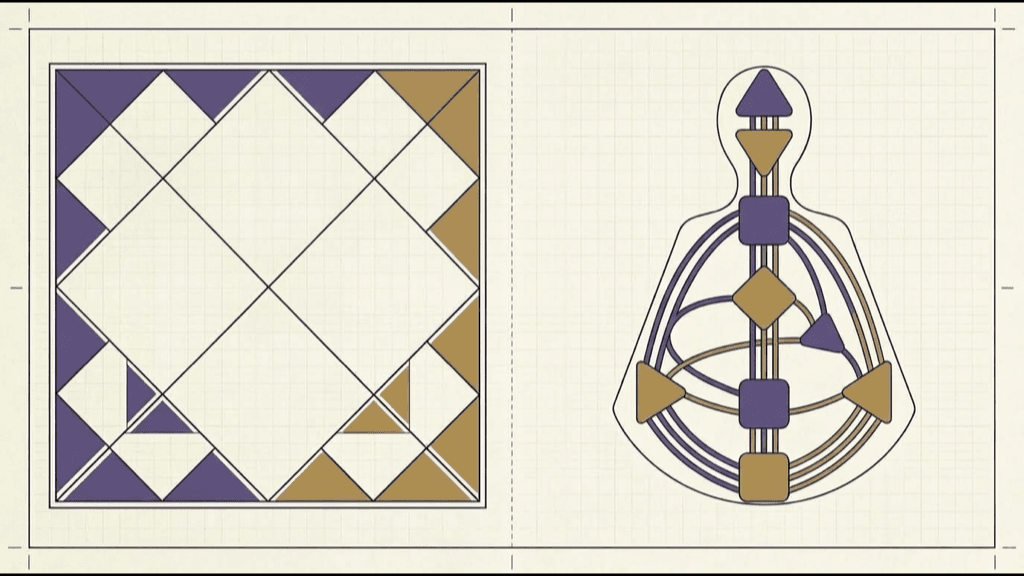
It also stopped being a single result screen. The Human Design workspace splits across nine tabs: Overview, Centers, Channels, Activations, Transits, PHS, Cycles, Timing and Pair. Overview names the Incarnation Cross together with its angle, Right Angle, Juxtaposition or Left Angle, beside Type, Strategy, Authority, Profile and Definition. Transits works on a chosen UTC moment against a saved chart and returns the gate activations, the channels they temporarily complete, and any center that comes into definition, with a standing note that none of this changes the underlying design. Cycles handles Solar Return, Lunar Return, Saturn Return, Uranus Opposition and Chiron Return in Human Design terms, each with its exact pass and motion.
Timing is the birth-time sensitivity tab, and it is the one I would point a sceptic at. Pick an interval around the recorded time and the app tells you which layers hold and which flip inside it. A client who remembers only "some time in the evening" gets an honest answer about what can be read and what cannot.
The Pair tab produces no number. Every channel contact is classified as Electromagnetic, Companionship, Dominance or Compromise, contact counts carry a note that counts describe contacts rather than relationship quality, and center definition marks the centers that exist only when two people are together. A single compatibility percentage would have to average mechanics that pull in opposite directions, so we do not publish one, in the app or in the free Human Design calculator. PHS carries Determination and Environment in observational language, with the non-medical notice stated rather than buried.
Kabbalah: a weighted Tree, with its provenance in view
The Kabbalah module arrived at the end of August on the Adept plan. It draws the Tree of Life for one nativity: 10 sephiroth weighted by the condition of the planet carrying each, and 22 paths weighted by the natal aspect between the two ends. 4 systems are selectable, from Classical through to an extended Golden Dawn.
The panel that matters most is the provenance one. It names the attribution behind the tree on screen, and states that the weighting layer is Astrolium's own reading, neither ancient nor traditional Jewish Kabbalah. Paths ending on the Ascendant are flagged as time-sensitive; paths with an outer planet at one end are flagged as generational, since everyone born within months shares them. The module requires a recorded birth time and refuses to substitute noon, which is the correct behaviour for a technique this dependent on the angles. The Tree of Life entry covers the structure itself.
Numerology, now free everywhere
Numerology moved to the free tier on every plan in early September. The module computes the core five, meaning Life Path, Expression, Soul Urge, Personality and Birthday, then adds Personal Year, Maturity and the Karmic Lessons taken from the digits missing in the name. It shows the reduction working for each figure, preserves master numbers at the component step, and prints karmic-debt doubles beside the reduced digit rather than in place of it.
A name mixing the Latin table and the 33-letter Russian Cyrillic one is refused with an explanation rather than transliterated quietly, since the two have no agreed way to combine. The Ask AI action on each figure sends the calculated numbers, never the name. The method is Pythagorean; Chaldean appears in settings as locked and is not in this version. The free numerology calculator covers the three core numbers without an account.
What this cycle was actually about
Every one of these systems could have shipped as a thin result page with a confident paragraph attached. The harder and more useful version states its frame: which ayanamsa, which node, which house convention, which attribution, what the software will not compute and why. A practitioner can work with a stated limit. Nobody can work with a number whose derivation is hidden.
Jyotish and Human Design are on Pro, Kabbalah is on Adept, numerology is free. Pricing has the rest of the detail.