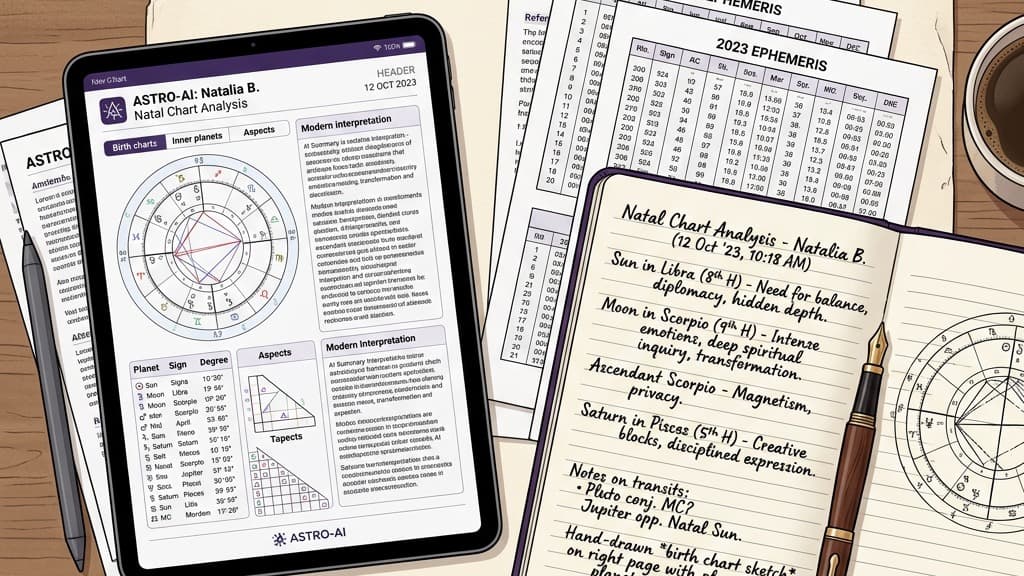
After testing every major house system across the Astrolium user base, whole sign houses became the default — not for ideology, but because they were the only system where house meanings stayed legible at every latitude and time of day. See features, pricing, and try the synastry calculator under the new default.
The house system question is the oldest live argument in astrology, and software vendors have, for 30 years, picked a side without explaining themselves. Most picked Placidus. Astrolium picked whole sign. Here's the reasoning.
What whole sign actually is
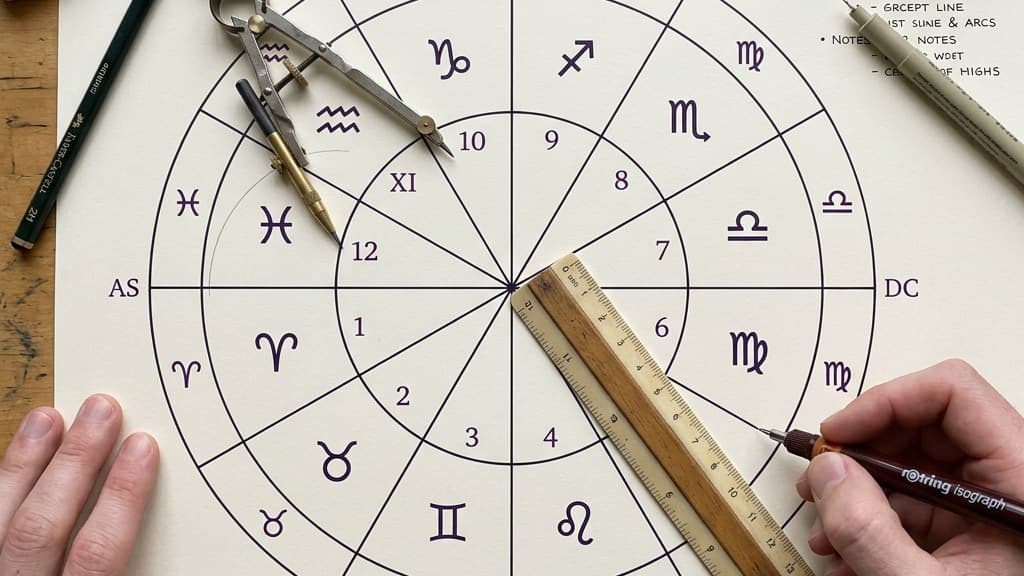
In the whole sign system, each sign is one house. If your Ascendant falls in Cancer, then Cancer (all 30 degrees of it) is your first house, Leo is your second, Virgo your third, and so on. Houses don't get larger or smaller depending on your latitude. Cusps fall on sign boundaries. The math is trivial; the implications are deep.
This is the system used by every Hellenistic astrologer whose work survives. It is the system Vettius Valens uses in the Anthology, the system Dorotheus uses in the Pentateuch, and the system used by the medieval Persian and Arabic tradition that inherited the technique. It was the default for at least 1000 years before quadrant systems became dominant in the Latin West.
For most of astrology's recorded history, "house" meant "sign-from-the-Ascendant." Everything else is a later refinement.
What Placidus is, and why people use it
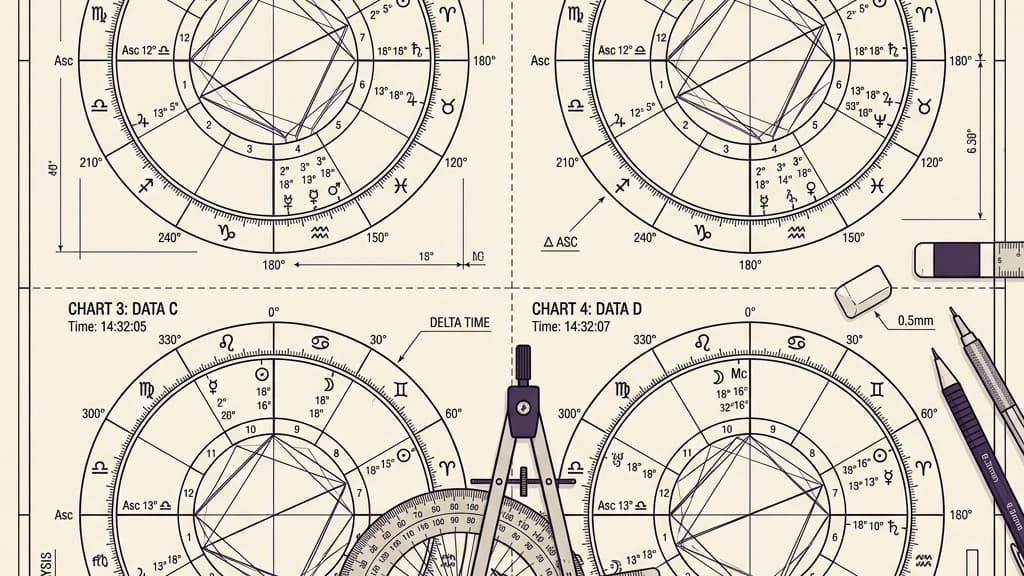
Placidus is a quadrant system: it divides the visible day-arc and night-arc of the ecliptic into equal time portions. The cusps fall wherever those time-divisions land, which means at high latitudes the houses get extremely lopsided. 10 degrees here, 50 degrees there.
Placidus has its uses. It encodes diurnal motion into the chart, which lets you do certain time-based predictive techniques (primary directions, in particular) cleanly. It also gives you finer angular distinctions for transits to the angles, which some practitioners value highly.
But it has costs. At London latitude (51° N), house sizes can vary by a factor of 3. At Reykjavík (64° N), some houses degenerate or invert. Above the Arctic Circle, the system fails entirely. A house system that breaks above 66° N is, at minimum, telling you something about its assumptions.
Why Astrolium made whole sign the default
Three reasons.
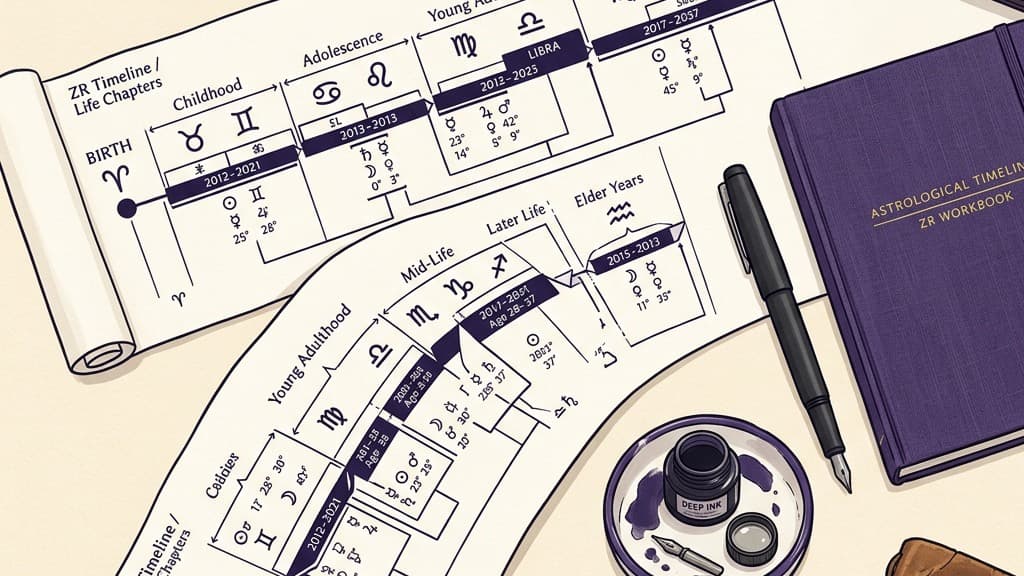
One: it's what the technique was designed for. The Hellenistic predictive techniques Astrolium ships (profections, ZR, time-lord work) were developed in a whole sign world. Running them on Placidus houses introduces small but real distortions in which planet "rules" which year, and we'd rather not.
Two: it scales globally. Astrolium has users in Tromsø, in Singapore, in Quito, in Buenos Aires. Whole sign behaves the same at every latitude. Quadrant systems do not. If a client in Helsinki has a 50 degree first house in Placidus and a 30 degree first house in whole sign, the latter is the system that matches the natal techniques we're going to read with.
Three: it's the more conservative choice. For a beginner, whole sign is easier to read. For a tradition-aware practitioner, it's the historically grounded option. For a Placidus loyalist, it's 3 clicks to switch. The default that asks the least and explains the most is the right default.
When to use Placidus instead
I switch in three situations:
- Primary directions. The technique was developed in a quadrant frame and reads cleanest there. Astrolium supports both, but Placidus is the natural fit.
- Angular precision matters. If you're reading a chart where a planet sits within 2 degrees of the MC and the question is whether it's in the 9th or 10th, Placidus gives you a different answer than whole sign does. Sometimes that's the answer that matches the client's life.
- Working with another practitioner who uses Placidus. Speaking the same vocabulary saves time. Astrolium will meet you there.
The systems we don't default to (but support)
Astrolium ships 23 house systems. The ones most practitioners reach for — whole sign, Placidus, Porphyry, Regiomontanus, Equal, Alcabitius, and Campanus — each have a constituency.
Equal house is whole sign's close cousin: each house is exactly 30 degrees from the Ascendant, but houses can split signs. It avoids the latitude problem of Placidus while preserving angular precision. It's the right answer for some practitioners; it's not ours.
Porphyry trisects the quadrants and is the simplest quadrant system. Regiomontanus was the medieval Latin standard before Placidus took over. Alcabitius is the medieval Arabic standard. Campanus is geometrically beautiful and rarely used. Astrolium supports them all because someone reading this paragraph will need exactly one of them, and we want to be the tool that has it. Read the comparison page for how this compares to Solar Fire and AstroGold's house pickers.
A note on extreme latitudes
Astrolium tracks roughly 80 active users above 60° N (Stockholm, Helsinki, Tromsø, Reykjavík) and 20 below 45° S (Wellington, Hobart, Punta Arenas). For both groups, whole sign produces a usable chart that the predictive techniques can read against. Placidus, on the same charts, either inverts houses or produces a 4 degree second house against a 56 degree third house. The math is correct in both systems; what differs is whether the result makes sense to a working astrologer. Whole sign almost always does.
The deeper point
House system religion is a distraction. Different systems answer different questions. Whole sign tells you what sign is foregrounded; Placidus tells you what time-arc is foregrounded. They are different lenses on the same chart, and any working astrologer benefits from being able to switch between them.
What matters is that your tool doesn't lie about which lens you're using. Astrolium puts the chosen house system in the chart legend, in the PDF export metadata, and in any text export. If you publish a reading from Astrolium, a reader with Solar Fire on Placidus can run the chart, see why the houses differ, and check our work.
That's the only house system position Astrolium holds strongly: that whichever system you use, the audit trail be complete. For the timing techniques whole sign was designed for, see the predictive timing feature and the Saturn return calculator. For the engineering behind house calculation, the ephemeris service post covers the 8 microsecond vs 180 microsecond gap between closed-form and iterative house systems.