Astrolium tracks this conjunction as one of the most technically significant outer-planet alignments of the 2020s. Saturn and Neptune meet at 0°–1° Aries in 2026 for the first time since their 1989 conjunction in Capricorn. The difference in sign alone shifts the interpretive frame considerably.
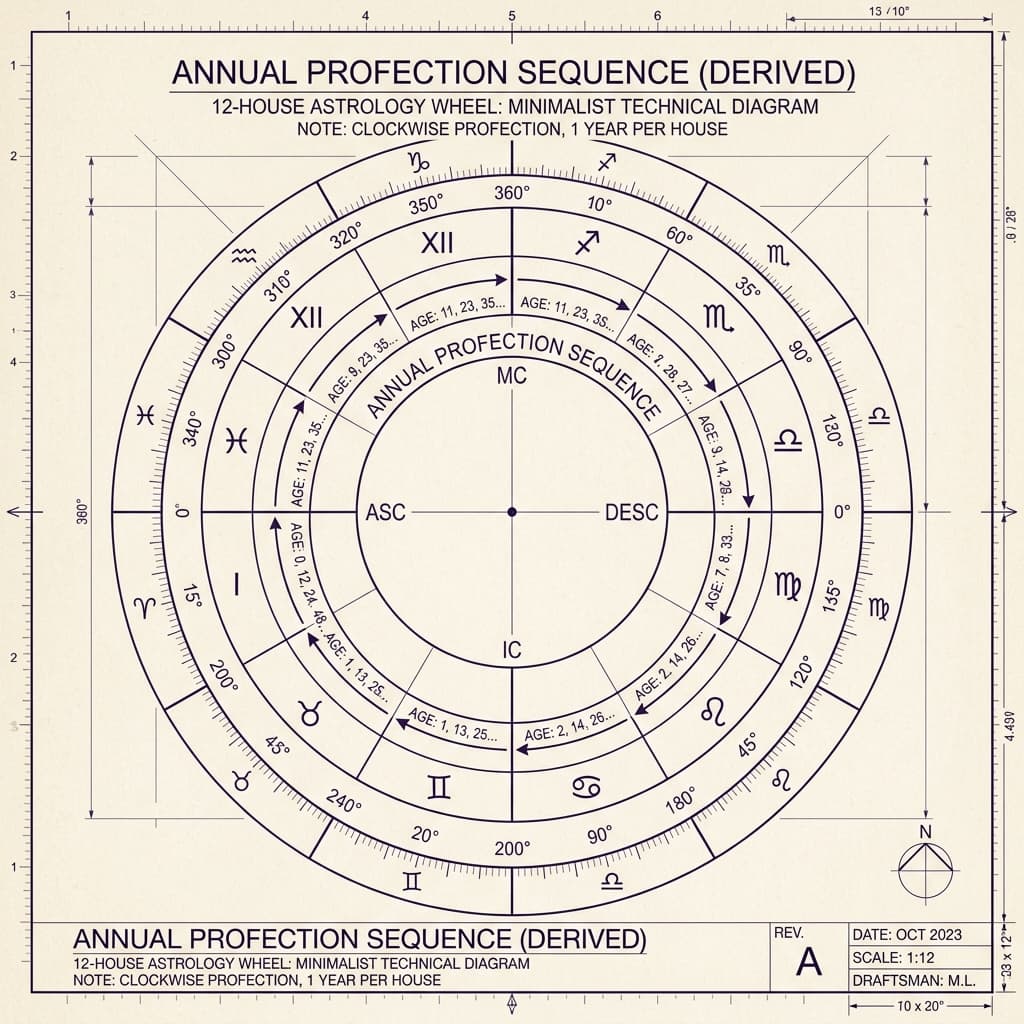
Use the transit report to check how this conjunction aspects your natal chart, or the profections calculator to identify which house 0° Aries activates in the current year of your life.
The Saturn-Neptune conjunction is a rare alignment between Saturn and Neptune that occurs roughly every 36 years, last exact in November 1989 at 10 to 11 degrees Capricorn and next exact on February 20, 2026 at 0 to 1 degrees Aries. The conjunction marks moments when structural reality (Saturn) meets collective vision or dissolution (Neptune), historically corresponding to political restructurings, ideological shifts, and the collapse of established systems. The 1989 Capricorn conjunction coincided with the fall of the Berlin Wall and Soviet bloc dissolution; the 1953 Libra conjunction with postwar UN and NATO consolidation; the 1917 Leo conjunction with the Russian Revolution and the end of European empires. The 2026 Aries occurrence at the vernal point shifts themes from institutional collapse toward individual sovereignty and new beginnings. The conjunction activates any natal planet within 3 degrees of 0 degrees Aries, Cancer, Libra, or Capricorn. Astrolium's transit report shows where this conjunction aspects your natal chart.
When does the Saturn-Neptune conjunction in Aries happen
Saturn and Neptune meet at 0°–1° Aries for the first exact pass on February 20, 2026. This is an Aries ingress conjunction: both planets cross the zodiac's first degree simultaneously. Saturn retrogrades in mid-2026, producing a second exact pass around October 2026. Saturn's retrograde arc typically lasts around 4 months, so the second pass window runs September through November. A third pass is possible in early 2027 if Saturn's retrograde degree aligns for a third contact, but practitioners should verify the exact dates in an ephemeris.
The 0° Aries degree carries particular weight in mundane astrology. It is the vernal point, the reference for the entire tropical zodiac, and the degree used for the Aries ingress chart each year on March 20. A conjunction happening at this degree amplifies the mundane reading beyond what the same conjunction at, say, 15° Scorpio would produce.
Saturn brings structure, limits, consequence, and the pressure toward form. Neptune brings collective vision, dissolution, idealism, and the thing that cannot hold a fixed shape. At their conjunction, these two forces are briefly in the same place. What crystallizes at the conjunction can define a theme for the roughly 36 years until they meet again.
What are the historical parallels for this conjunction
The 1989 conjunction at 10°–11° Capricorn ran across three exact passes: March, June, and November. The Berlin Wall fell on November 9, 1989, during the third pass. The structural collapse of the Soviet bloc as an institution, along with the collective idealism of 1989 across Eastern Europe, is textbook Saturn-Neptune: organized power (Saturn) meeting the force that dissolves or dissolves into it (Neptune), in the sign of long-established institutions (Capricorn).
The 1953 conjunction at 22°–23° Libra coincided with post-WWII reconstruction and early Cold War consolidation. The UN system was being built; NATO was a new structure. Saturn-Neptune in Libra: the attempt to formalize peace and collective relations into lasting treaties and institutions.
The 1917 conjunction at 3°–4° Leo ran alongside the Russian Revolution and the final phase of WWI. Old empires were ending. The Romanov dynasty, the Ottoman Empire, the Austro-Hungarian Empire all dissolved across 1917–1918. Saturn (empire, structure) meeting Neptune (dissolution, the collective) in Leo (sovereignty, monarchic authority) at the actual moment of those collapses.
The pattern across these three cycles: Saturn-Neptune conjunctions mark a moment when collective idealism and structural reality either align or collide. Sometimes the ideal crystallizes into a lasting structure. Sometimes the structure dissolves under the weight of something it cannot accommodate. The historical record leans toward both happening at once in different parts of the world.
What Aries changes
Prior conjunctions fell in earth and air signs: Capricorn in 1989, Libra in 1953, Leo in 1917, and before that Gemini and Taurus. The shift to Aries in 2026 changes the nature of the themes the conjunction foregrounds.
Earth and air conjunctions tend toward institutional and relational manifestation: structures built or dismantled, alliances formed or broken, systems of governance reorganized. Aries points inward toward the individual as initiator. The themes of identity, sovereignty, self-assertion against collective pressure, and the willingness to act before all conditions are met become primary.
At 0° Aries specifically, there is also the vernal point dimension. The tropical zodiac begins here. This degree is the reference for every Aries ingress chart used in mundane astrology. The conjunction does not simply occur in Aries; it occurs at the very starting point of the zodiac's cycle, which astrologers working with world horoscopes treat as significant beyond the sign itself.
The practical reading for practitioners: where Capricorn-sign conjunctions like 1989 produced stories about institutions and their failures, the 2026 Aries conjunction is more likely to produce stories about individuals asserting identity and sovereignty against collective or institutional pressure, and about the tension between personal will and shared reality.
How do practitioners read this conjunction in a natal chart
Any natal planet within 3 degrees of 0° Aries receives a conjunction from both Saturn and Neptune across the 2026 transit period. Natal planets at 0° Cancer (square), 0° Libra (opposition), or 0° Capricorn (square) receive hard aspects. The 3 degrees of orb covers roughly 27° to 3° in any cardinal sign.
The most directly activated natal points are Sun, Moon, Ascendant, and MC at 0° cardinal. For these placements, the conjunction is active for much of 2026 and potentially into early 2027.
Saturn-Neptune natal contacts carry a specific interpretive signature: the tension between form and formlessness, structure and spirituality, disciplined ambition and transcendence. People with natal Saturn-Neptune contacts frequently navigate a friction between the need to build something lasting and an equally strong pull toward dissolving structure in favor of something more fluid. The 2026 transit brings an external event or pressure that engages this same tension in their lives.
For client work, the most useful single question is: which house does 0° Aries fall in natally? That house is the arena where the conjunction's themes play out across 2026. Second-house 0° Aries: Saturn-Neptune themes around income, possessions, self-worth. Seventh-house: themes around partnership, contracts, the tension between commitment and dissolution. Check the transiting Saturn and Neptune degree against the natal chart each month through 2026 using the transit report to identify the specific windows when the conjunction is exact for that chart.
Practitioners who use whole-sign houses should note that 0° Aries falls in the 1st house for Aries rising, the 2nd for Pisces rising, the 3rd for Aquarius rising, and so on around the wheel. This is standard but worth stating explicitly since the 0° degree sits at the first minute of the sign.
Mundane astrology applications
The 2026 Aries ingress chart, cast for March 20 at the moment the Sun enters Aries, will show this conjunction still active within a 3° orb at minimum. Practitioners who work with ingress charts for national or global forecasting should treat this as a defining feature of the 2026 Aries ingress chart worldwide.
Solar return charts cast in 2026 for people born with the Sun near 0° Aries will contain this conjunction in the SR. This is significant: the SR 1st-house placement of a Saturn-Neptune conjunction for an Aries Sun is one of the more demanding SR patterns, combining creative or spiritual ambition with structural pressure in the house of self.
For electional work, the active window of this conjunction (roughly January through March 2026 for the first pass, September through November for the second) is not optimal for launching ventures requiring sharp boundaries, clear contracts, or stable structural commitments. Neptune blurs the terms of any agreement made while it sits on Saturn. The same window is better for creative projects, spiritual work, or collective-purpose endeavors where some ambiguity in form is acceptable or even useful.
Check the ephemeris for Saturn and Neptune's exact degree positions throughout 2026. For comparing how this conjunction affects two charts in a relationship reading, see natal compare.